Almost nobody on Earth is safe from air pollution, study says
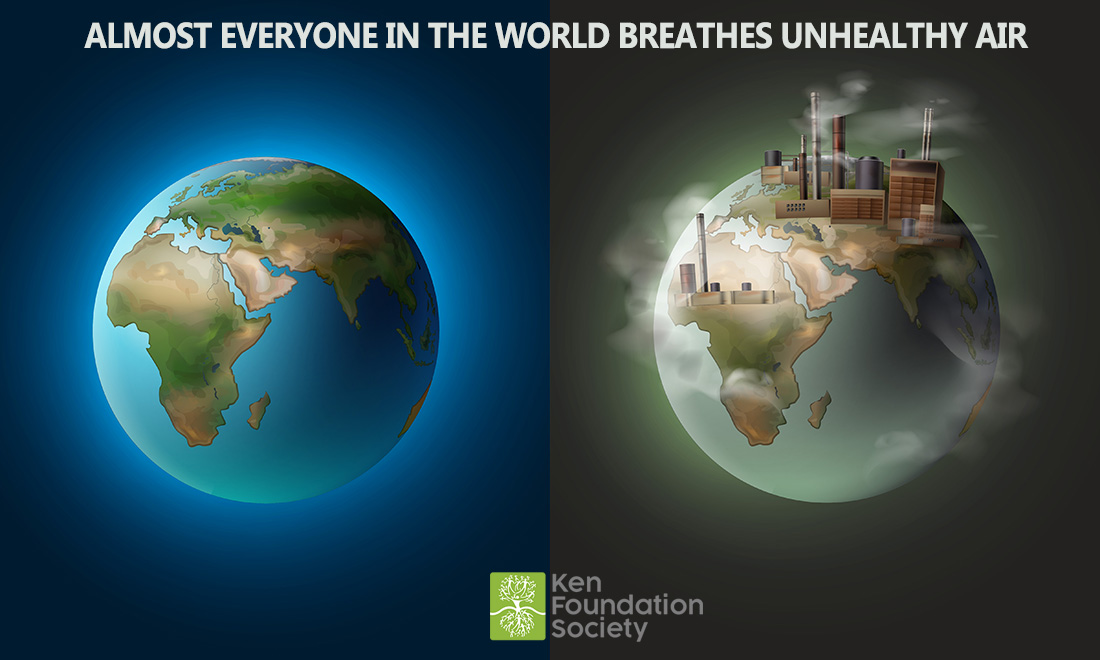
Air pollution is one of the world's biggest problems, and it has reached a level wherein you are not safe from it anywhere in the world. You might be mistaken if you thought you were breathing clean air.
According to a study by Melbourne’s Monash University, almost no area on earth has air pollution levels deemed safe by the World Health Organisation (WHO).
Less than 0.2% land area has good air
According to the study, only 0.18% of the global land area is exposed to concentrations of PM 2.5 that are below the levels of safety recommended by the WHO. The number gets worse when you talk about people. Only 0.001% of the global population can breathe air below the safety levels recommended by the WHO.
What are some of the major sources or causes of ambient air pollution?
Major sources of ambient air pollution include inefficient modes of transport (polluting fuels and vehicles), inefficient combustion of household fuels for cooking, lighting and heating, coal-fired power plants, agriculture, and waste burning.
The air we breathe has a very exact chemical composition; 99% of it is made up of nitrogen, oxygen, water vapor and inert gases. Air pollution occurs when things that aren't normally there are added to the air. A common type of air pollution happens when human activity releases particles into the air from burning fossil fuels. This pollution looks like soot, containing millions of tiny particles, floating in the air.
Another common type of air pollution is dangerous gases, such as sulfur dioxide, nitrogen oxides, carbon monoxide and chemical vapors. These can take part in further chemical reactions once they are in the atmosphere, creating acid rain and smog. Other sources of air pollution can come from within buildings, such as secondhand smoke.
Finally, air pollution can take the form of greenhouse gases, such as carbon dioxide or sulfur dioxide, which are warming the planet through the greenhouse effect. The greenhouse effect is when gases absorb the infrared radiation that is released from Earth, preventing the heat from escaping. This is a natural process that keeps our atmosphere warm. If too many gases are introduced into the atmosphere, though, more heat is trapped and this can make the planet artificially warm, according to Columbia University.
Air pollution kills more than 2 million people each year, according to a study published in the journal of Environmental Research Letters. The effects of air pollution on human health can vary widely depending on the pollutant, according to Hugh Sealy, professor and director of the environmental and occupational health track at the Department of Public Health and Preventive Medicine, St. George's University, St. George's, Grenada. If the pollutant is highly toxic, the effects on health can be widespread and severe. An irritant (e.g. particulates less than 10 micrometers) may cause respiratory illnesses, cardiovascular disease and increases in asthma. "The very young, the old and those with vulnerable immune systems are most at risk from air pollution. The air pollutant may be carcinogenic (e.g. some volatile organic compounds) or biologically active (e.g. some viruses) or radioactive (e.g. radon). Other air pollutants like carbon dioxide have an indirect impact on human health through climate change,"
Preventive measures to control diseases caused by air pollution
Implementing some innovative strategies can control the diseases caused by air pollution. They may include the following.
- Curbing the pollution at the source level, such as the usage of less polluting fuels both in factories and at home
- Shifting to cleaner fuels for our vehicles, such as CNG and electric vehicles
- Implementing clean technologies in industries to reduce the emission of smoke
- Using energy-efficient equipment at home and in factories
- Installation of air purifiers in cars and at home
- Using face masks while going outside
- Encouraging carpools and public transports
- Encouraging afforestation